What kills me is the "pick and choose" ability by so many people. You can't just pick a quote and decide this one is literal, but the rest are not.
According to Leviticus, eating shellfish and pork are a death worthy crime. Hell, if you follow the Old Testament (or the Torah to some of us) that closely, you shouldn't have a New Testament.
But let's look a little further here:
Leviticus 20:9 "“‘Anyone who curses their father or mother is to be put to death." This would kill off most of the western world.
Leviticus 20:10 “‘If a man commits adultery with another man’s wife—with the wife of his neighbor—both the adulterer and the adulteress are to be put to death."
Anyone sensing a pattern here?
Leviticus 21 "“‘Priests must not shave their heads or shave off the edges of their beards or cut their bodies."- I wonder if he shaved this morning...or got a haircut...EVER!
Leviticus 19 ‘Keep my decrees.
“‘Do not mate different kinds of animals.
“‘Do not plant your field with two kinds of seed.
“‘Do not wear clothing woven of two kinds of material.
Some time in 1976 I discovered that my favorite television show at the time, Star Trek was listed as "Science Fiction" in the TV Guide.
Since this was a fairly "dry" period for new science fiction television, I thought I would scan the guide and see if I could find more shows that were also "Science Fiction."
I stumbled upon a show on PBS called "Doctor Who." I had never heard of it before and neither had my parents or anyone else I had talked to at the time.
Now I grew up in the US in pretty big city, Doctor Who had been on the air in England since 1963, but it was still a pretty obscure thing in the states in the 1970s. It was relegated to the "Nerd-ier" section of TV on the PBS stations as an unusual import.
Without knowing any of this, I watched my first episode "Pyramids of Mars" and was totally confused. Still, the inside of the TARDIS seemed pretty cool, so I stuck with it. I watched other Tom Baker episodes, not knowing anything about the history of the show, it's mythology (which it had even then) or it's fans. I remember watching Tom Baker's regeneration into Peter Davison and scratching my head.
With Star Wars' release in 1977, pop science fiction and simple space opera became common. We got some great surprises like Battlestar Galactica and some abominations like Quark.
Doctor Who remained in obscurity in the US.
In 1982 I met a guy in school who was an overly serious Doctor Who fan. He was just happy to find ANYONE who even knew anything about the show. He was convinced that Doctor Who didn't need a fan club, it needed an "Appreciation Society." Yeah, I know it doesn't get any nerdier than that.
I knew he was a little overly serious, but the whole history of the show drew me in. The older episodes were not yet available in the US and I learned there where whole seasons of the show that were supposedly lost or destroyed.
He lent me books of older episodes, which I devoured quickly. It allowed me to catch up on the long history of the TV show without being able to see the old episodes.
In the months that followed, PBS aired some of the Doctor previous to Tom Baker, Jon Pertwee. Here is when I think I became a real "fan" of the show.
Unfortunately, the show's popularity was waning and it was cancelled in 1989. Other than a few rumblings, it seemed Doctor Who was going to fade into British Myth and US obscurity.
In the 1990s, there was a ray of hope with a US produced Doctor Who movie. The movie itself, featured Paul McGann as a rather like-able Doctor. The show had some beautiful sets and an excellent performance by Eric Roberts as the Master, but the show's publicity was lackluster and the story dragged quite a bit. It seemed to only appeal to a few Doctor-Who-starved fans.
When it returned in 2006 with Christopher Eccleston, I assumed it might last a season, if that. I figured it will either be so removed from the original that it will annoy fans of the classic Doctor Who (like the new Star Trek movies), or it just would not have enough promotion and it would die like the McGann movie did.
In an amazing turn this new Doctor Who (and BBC America) brought the show to the main stream. It also helped to re-ignite a lot of intelligent science fiction again. It's not completely uncommon for Americans to know what a Dalek is now. Torchwood spin off even made Doctor Who sexy (who knew).
The Doctor is now even in music videos! Talk about making it into pop-culture!
Here we are almost 40 years after my first viewing experience and more than 50 years since the first episode. It's come a LONG way.
I still find it gratifying that my favorite shows growing up were Star Trek, Doctor Who and Battlestar Galactica. My favorite movie was Star Wars. I guess I picked ones that would last.
"As a NASA spacecraft approaches a dwarf planet in our solar system, Ceres, scientists are stumped by what appear to be two bright lights shining from its surface." This is interesting. It's probably nothing, but it opens the question (in my mind anyway), of what if we did find a sign of life. How hard would we work to dismiss it? We can say it's probably this or that, but truthfully, at this distance, we really cannot say for sure.
All of the below work is quotes from Stephen King:
On word choice One of the really bad things you can do to your writing is to dress up the vocabulary, looking for long words because you’re maybe a little bit ashamed of your short ones.
Remember that the basic rule of vocabulary is use the first word that comes to your mind, if it is appropriate and colorful.
The word is only a representation of the meaning; even at its best, writing almost always falls short of full meaning. Given that, why in God’s name would you want to make things worse by choosing a word which is only cousin to the one you really wanted to use?
On grammar
Must you write complete sentences each time, every time? Perish the thought. If your work consists only of fragments and floating clauses, the Grammar Police aren’t going to come and take you away.
Take any noun, put it with any verb, and you have a sentence. It never fails. Rocks explode. Jane transmits. Mountains float. These are all perfect sentences. Many such thoughts make little rational sense, but even the stranger ones (Plums deify!) have a kind of poetic weight that’s nice. The simplicity of noun-verb construction is useful — at the very least it can provide a safety net for your writing.
Grammar is not just a pain in the ass; it’s the pole you grab to get your thoughts up on their feet and walking. Besides, all those simple sentences worked for Hemingway, didn’t they? On reading
If you want to be a writer, you must do two things above all others: read a lot and write a lot. There’s no way around these two things that I’m aware of, no shortcut.
Reading is the creative center of a writer’s life. I take a book with me everywhere I go, and find there are all sorts of opportunities to dip in. The trick is to teach yourself to read in small sips as well as in long swallows. Waiting rooms were made for books — of course! But so are theater lobbies before the show, long and boring checkout lines, and everyone’s favorite, the john. You can even read while you’re driving, thanks to the audiobook revolution.
The real importance of reading is that it creates an ease and intimacy with the process of writing; one comes to the country of the writer with one’s papers and identification pretty much in order. Constant reading will pull you into a place (a mind-set, if you like the phrase) where you can write eagerly and without self-consciousness. It also offers you a constantly growing knowledge of what has been done and what hasn’t, what is trite and what is fresh, what works and what just lies there dying (or dead) on the page. The more you read, the less apt you are to make a fool of yourself with your pen or word processor.
On writing
By the time you step into your new writing space and close the door, you should have settled on a daily writing goal. As with physical exercise, it would be best to set this goal low at first, to avoid discouragement. I suggest a thousand words a day.
With that goal set, resolve to yourself that the door stays closed until that goal is met. Get busy putting those thousand words on paper... In an early interview (this was to promote Carrie, I think), a radio talk-show host asked me how I wrote. My reply — “One word at a time” — seemingly left him without a reply. I think he was trying to decide whether or not I was joking. I wasn’t.
In the end, it’s always that simple. Whether it’s a vignette of a single page or an epic trilogy like The Lord of the Rings, the work is always accomplished one word at a time. On what to write about
Now comes the big question: What are you going to write about? And the equally big answer: Anything you damn well want. Anything at all…as long as you tell the truth.
Write what you like, then imbue it with life and make it unique by blending in your own personal knowledge of life, friendship, relationships, sex, and work. Especially work. People love to read about work. God knows why, but they do. If you’re a plumber who enjoys science fiction, you might well consider a novel about a plumber aboard a starship or on an alien planet. Sound ludicrous? The late Clifford D. Simak wrote a novel called Cosmic Engineers which is close to just that. And it’s a terrific read.
John Grisham, of course, knows lawyers. What you know makes you unique in some other way. Be brave. Map the enemy’s positions, come back, tell us all you know. And remember that plumbers in space is not such a bad setup for a story.
As many of you know, I became a dad this year to two
beautiful little girls.
As a result, the sequel to “Hath No Fury:” “Moments of Rhythm
and Magic” will be delayed a little further into 2015.
To carry you until then here is another VERY rough excerpt
from “Moments of Rhythm and Magic”:
DRAFT----
Even
before going to the house he shared with his Grandmother, he stopped by Amy's
house. He was pretty certain that the
Sellers family had moved when he tried calling Amy from Christie's house all
those months ago. Still, he had to
try. He found it dark and empty. An aging "Century 21" sign stood
outside.
"Sorry
man," Danny said.
"It's
ok," Mark said. Although he didn't
feel ok. He felt an incredible need to
be in his old home.
As he
walked over he glanced at the old meeting place he and Amy had, the little
hollow in the bushes. It was where they
had met countless times before their adventures. He had
expected to see it overgrown, or worse, to see the bushes around it
dying. What he did see surprised
him. In the hollow now grew a bush with
peach colored roses. They were
breathtakingly beautiful as they bloomed in the spring warmth.
He loves you.
Mark had
to work hard to hold back the flood of feelings that threatened to overwhelm
him. Determined to find something...some
peace. He soldiered on to his own house,
Danny in tow.
He found
his grandmother’s house to be empty and
boarded up. Some of the exterior looked
"blackened." It appeared as
though someone wanted to burn it, but either didn't know how, or was afraid to
get close enough to do it properly.
Graffiti had already begun to show up in spray-painted words of “all of them witches!” Mark wasn’t sure why, but he didn’t think these deeds were done by child pranksters, not in
this neighborhood, but by someone older, who should know better.
Danny had
offered to help him break in, but Mark still surprisingly had his key, which
worked the door lock and deadbolt.
Mark
reflexively called for Natasha, who, of course, didn’t come. The hint of
incense still permeated the air, and for an instant, Mark found it
comforting. Warm memories of his
grandmother and rituals filled his mind.
For an instant, he felt at home. It felt good, but somehow empty.
As they
walked through the entry way they found the incense smell was was mixed with a
musty smell and something really foul and rancid underneath.
The
police in Kingston weren't the fastest operating, and this place was still a
crime scene five months later. It would
not have given Mark comfort to know that his grandmother had already been dead
before the grizzly events of that Halloween evening had occurred. His
grandmother's body had been removed, but because it was still and active crime
scene it had not been cleaned up yet.
Danny
walked into the living room first, and, before Mark had a chance to see the
room Danny threw him back.
“What the hell are you doing?!” Mark yelled,
genuine surprise and anger in his voice.
“Mark, man, you don’t want to go in there?” Danny said holding Mark in something of a
bear hug.
An earlier article, I mentioned how the smaller device (i.e.
Smartphone) would become the centre of personal technology. It certainly has gone that way over the past
few years, with most consumers now carrying a Smartphone. Cellular devices that are NOT at least first
generation smart devices with screens are becoming more and more rare. Even my parents are now iPhone users!
We still see the need, however for the tablet and the laptop
(for a keyboard if nothing else). There are
still needs for larger screens and more human sized interfaces. Many human interface devices interconnect via
Bluetooth wireless protocol, which has recently become much more advanced and
efficient.
We will see a shift in the next three stages of personal
computing technology that will hinge on the advancement of wireless technology
as a whole; all protocols, from Bluetooth to wifi to Cellular.
First stage – A shift in the center
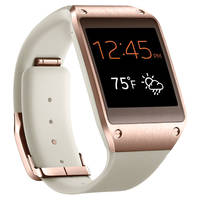
As many of you know from some of the past articles, we love
technology that is built into a watch.
It could be either a Dick Tracy or Knight Rider worship thing, but
mostly because it’s really cool and convenient.
Even Steve Wozniak called out for Apple to look
toward more wearable technology.
The first stage will see the center of the technology shift
to the wearable device itself. The
wearable device will be the heart/brains.
The larger interfaces, handsets, tablets, keyboards, screens etc will be
linked to this piece of wearable tech.
The wearable tech could either be a watch, glasses (Like
Google Glass), pendant or something new.
This device will be the local memory, and network/internet connection. Tablet and laptop-like interfaces will become
as generic and interchangeable as Bluetooth earpieces are to our Smartphones.
Second Stage- Access from Anywhere!
The next stage will be more subtle, and it’s happening
now. Most of our files and information
will be accessible from anywhere. Cloud
(such a trendy word) based information or internet accessible servers will be a
local source for data and applications, and it won’t matter on what device you
are on.
The wearable tech may shift to become the internet or
network interface and the secure personal gateway to private information.
Third Stage- It’s all in your head
Several teams at Princeton and Berkley are making real
advances in mapping out brain electrical configurations and mapping them to
specific thoughts. It’s a reasonable
assumption that a mental interface bay be developed. It may not completely replace hand gestures,
voice, touch-screens or keyboards for quite a while (at least for business),
but it may appear in the next 5-10 years for personal or consumer interaction.
Just don’t leave it on in your sleep!
This NEEDS to happen
As nice as all of our mobile technology is, all of our
devices suffer from the need to be constantly recharged. There is a huge market for portable batteries,
solar panels and anything to compensate for the ever growing demand for
portable power.
Until a miniature, practical, generator, fuel cell or REALLY
extended battery technology is developed, we will be constantly tethered.
Posted 8/11/2014 Two weeks ago I got approached by Dr. Seth Shostak from SETI and NASA. He does a regular science/technology radio show for NPR and Podcast
He read the article I did for DVICE on Orwellian technology being used today and wanted to interview me as a technology expert.
My Interview was on NPR across the US all last week and is available on line to listen to here: